Shiro Games has released a new development update for SpaceCraft, offering an in-depth look at the game’s Corporation system, a core multiplayer feature designed to support large-scale cooperation, shared progression, and long-term strategic play.
Corporations function similarly to guilds in traditional MMOs, allowing groups of players to work toward shared objectives while pooling resources and infrastructure. However, the developers emphasize that solo players are not excluded—any player can create a one-person Corporation and still access the same mechanics, albeit with greater personal workload.
Corporation Requests and Shared Progression
One of the defining features of Corporations is access to Requests, which are time-limited contracts issued by specialized NPCs located in space stations across the galaxy. These Requests are identical for all Corporations, but each NPC offers a different selection. Four of these NPCs are set to arrive in the playtest within the coming weeks, with more planned for Early Access and beyond.
Requests task Corporations with delivering large quantities of specific resources or manufactured items. Success depends heavily on efficient automation, logistics, and production chains, though wealthy Corporations may opt to purchase required goods outright. Once completed, Requests reward Corporations with a combination of three key currencies: License Points, Corpo Credits, and Reputation. Failing to meet a deadline results in the loss of delivered goods and wasted time.
Licenses, Permits, and Corporate Growth
License Points are used to unlock Corporation Licenses, which provide permanent bonuses such as increasing the number of buildings allowed in a shared Corporation base. These bonuses allow Corporations to dramatically outperform individual players in terms of production and efficiency.
Corpo Credits, meanwhile, are spent on Corpo Permits, powerful upgrades that enhance performance but require a daily upkeep cost. If a Corporation fails to maintain sufficient income, these permits can be lost, forcing leaders to make careful decisions about which upgrades to maintain.
The economic structure also allows for flexible management styles. Corpo Credits can be distributed among members, while standard in-game Credits can be converted and donated to the Corporation. This enables everything from cooperative profit-sharing groups to more competitive organizations that require member contributions.
Reputation, Roles, and Shared Assets
At present, Reputation is used solely to rank Corporations, though the developers note that rewards for top-ranking groups are still under consideration and community feedback is welcome.
Corporation Managers can assign roles with varying permissions, including asset management, permit activation, and member recruitment. Currently, Corporations operate under a single-manager hierarchy, but Shiro Games plans to expand leadership options in the future to support more diverse organizational structures.
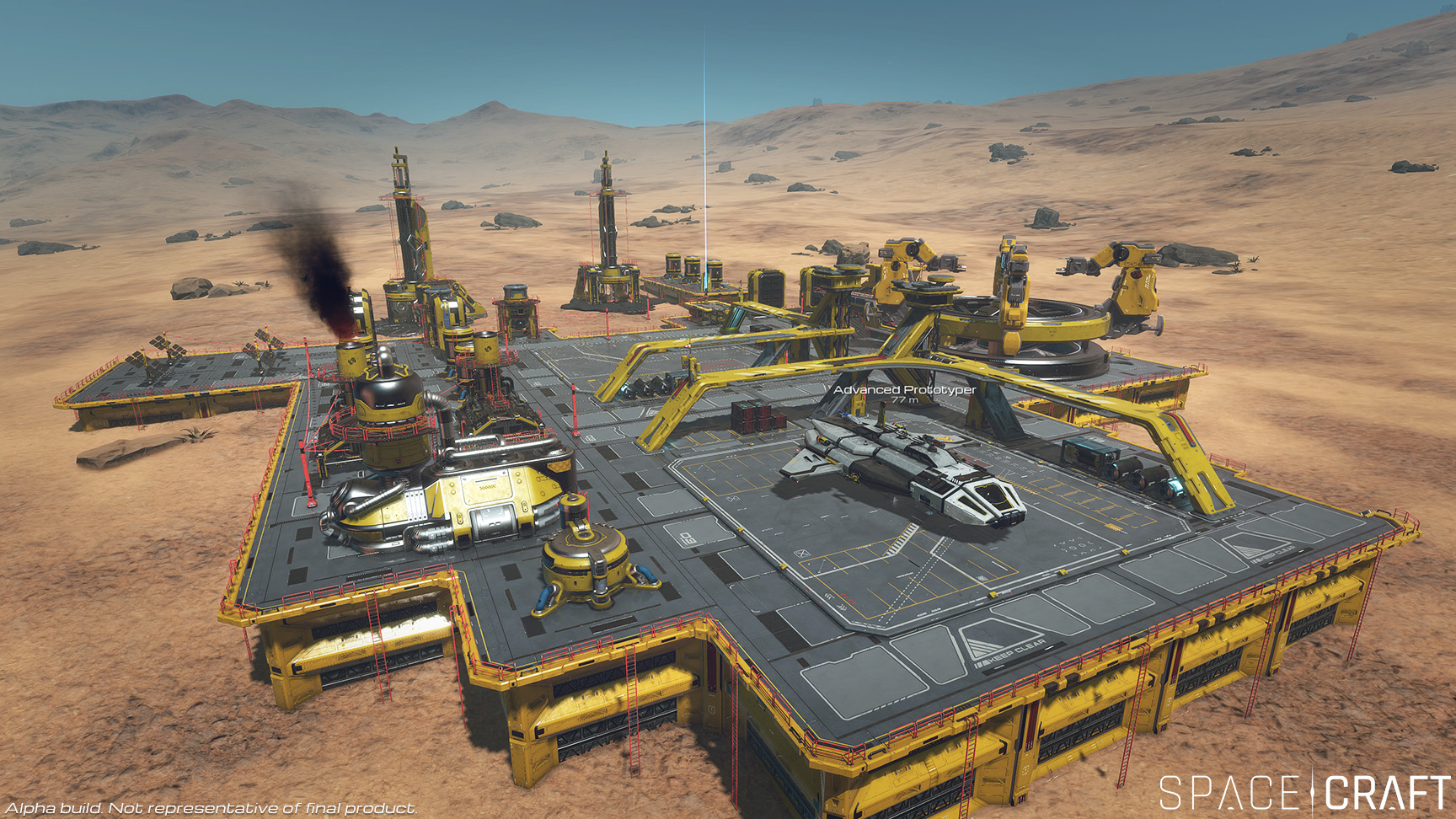
Corporations can also own shared ships and bases that are not tied to any individual player. The maximum number of shared assets is determined by Licenses and Permits rather than member count, with the current cap set at 12 bases and 12 ships. While powerful, maintaining this scale is costly, and the departure of key members can significantly disrupt operations.
Specialization and Playtest Progress
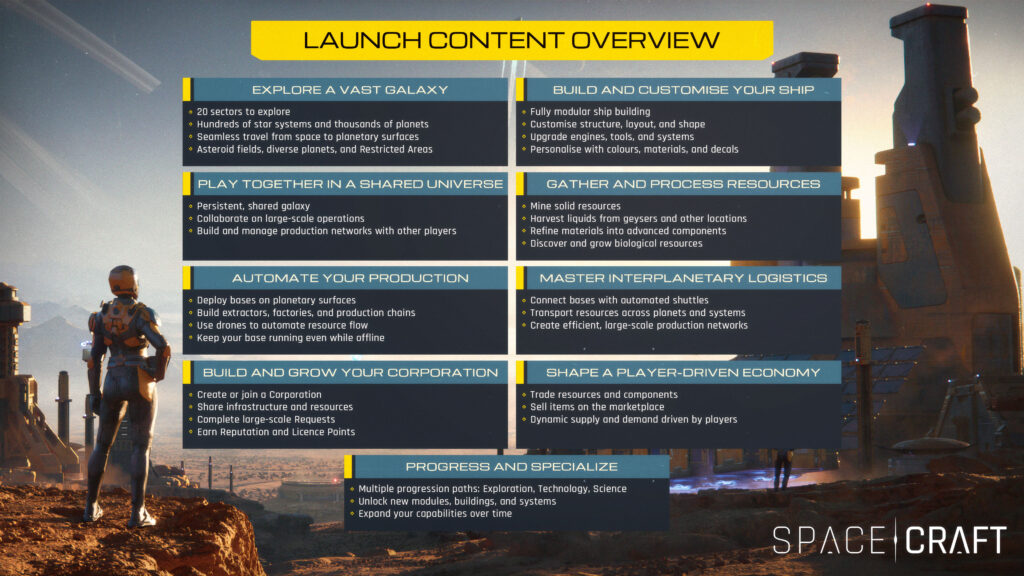
SpaceCraft’s player progression paths—Exploration, Technology, and Science (currently available in the playtest), with Combat planned for later—each contribute unique advantages to a Corporation. Explorers expand reach into distant systems, Technologists enhance automation and base efficiency, and Scientists produce advanced materials required for high-level operations.
The developers encourage specialization, noting that strong Corporations thrive on diverse expertise rather than uniform progression.
Shiro Games also shared an update on the ongoing playtest, confirming that development is steadily moving from Alpha to Beta. A new wave of playtest invitations is now expected in early February, slightly later than previously announced, ensuring new players gain immediate access to fresh content upon entry.
As Corporations continue to evolve during testing, player feedback will play a key role in shaping how these systems develop ahead of Early Access.
You can find the full the full blog post here.
About the Author